


Preservation of fertility
Fertility preservation refers to procedures that enable the preservation of reproductive cells and tissues of both women and men, and of embryos for the future in case of oncological disease, endometriosis, rheumatological disease but also prior to gender reassignment.
Fertility preservation refers to procedures that enable the preservation of reproductive cells and tissues of both women and men, and of embryos for the future in case of oncological disease, endometriosis, rheumatological disease but also prior to gender reassignment.
What is fertility preservation?
What is fertility preservation?
The procedure is available to both men and women. For female fertility preservation, we can preserve oocytes and ovarian tissue; for men, we can freeze sperm and testicular tissue. In case of couples, an embryo freezing procedure may also be feasible.
For women, the simplest method of preserving fertility is to collect oocytes during an ovarian puncture, followed by their corresponding preparation and freezing. Alternatively, a piece of ovarian tissue may be collected by laparoscopy and then frozen, to be reimplanted into the patient at the end of therapy in the future. This solution provides the woman with the chance to both restore fertility and hormonal function.
In men, we recommend semen collection and freezing. This material is available for future use during an insemination procedure or during an in vitro programme. If azoospermia is present and presence of spermatozoa is confirmed, a testicular biopsy (TESE, TESA or mTESE) and freezing of the collected material are possible.
If a woman or man is in a stable relationship and plans to have offspring in the future, we also recommend completing part of the IVF programme and freezing the embryos.
Cancer and tumor treatment
Are you ahead of or undergoing cancer treatment?
Read more about the government fertility preservation programme!
Read more
Diagnostics
Required testing
Female partner
Female partner
Male partner
Male partner
In order to proceed with the procedures for collecting and preserving oocytes, embryos and ovarian tissue, it is necessary to hold the valid results of the above tests.
Preservation of fertility
Course of procedure
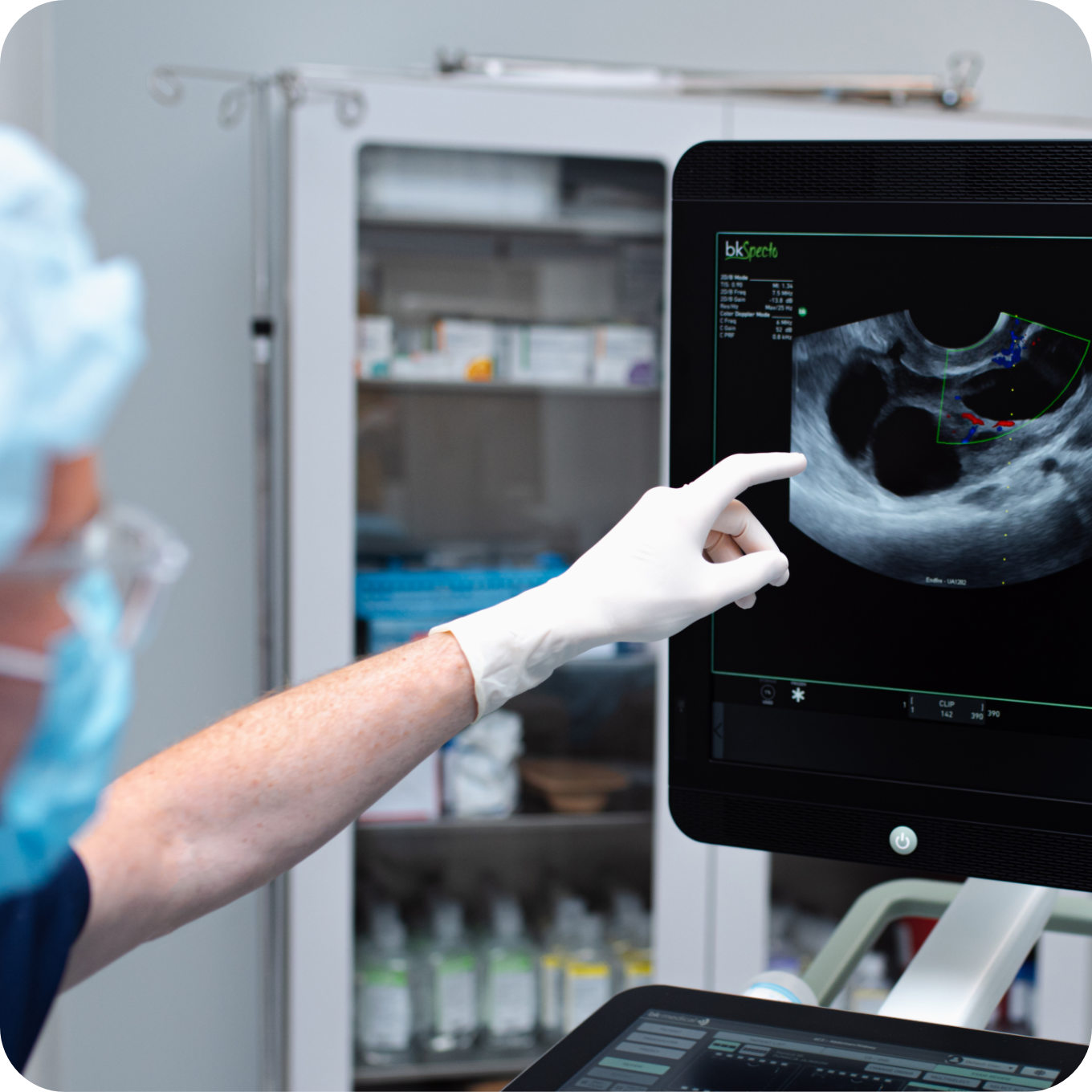
Stage 1
Cell and embryo collection
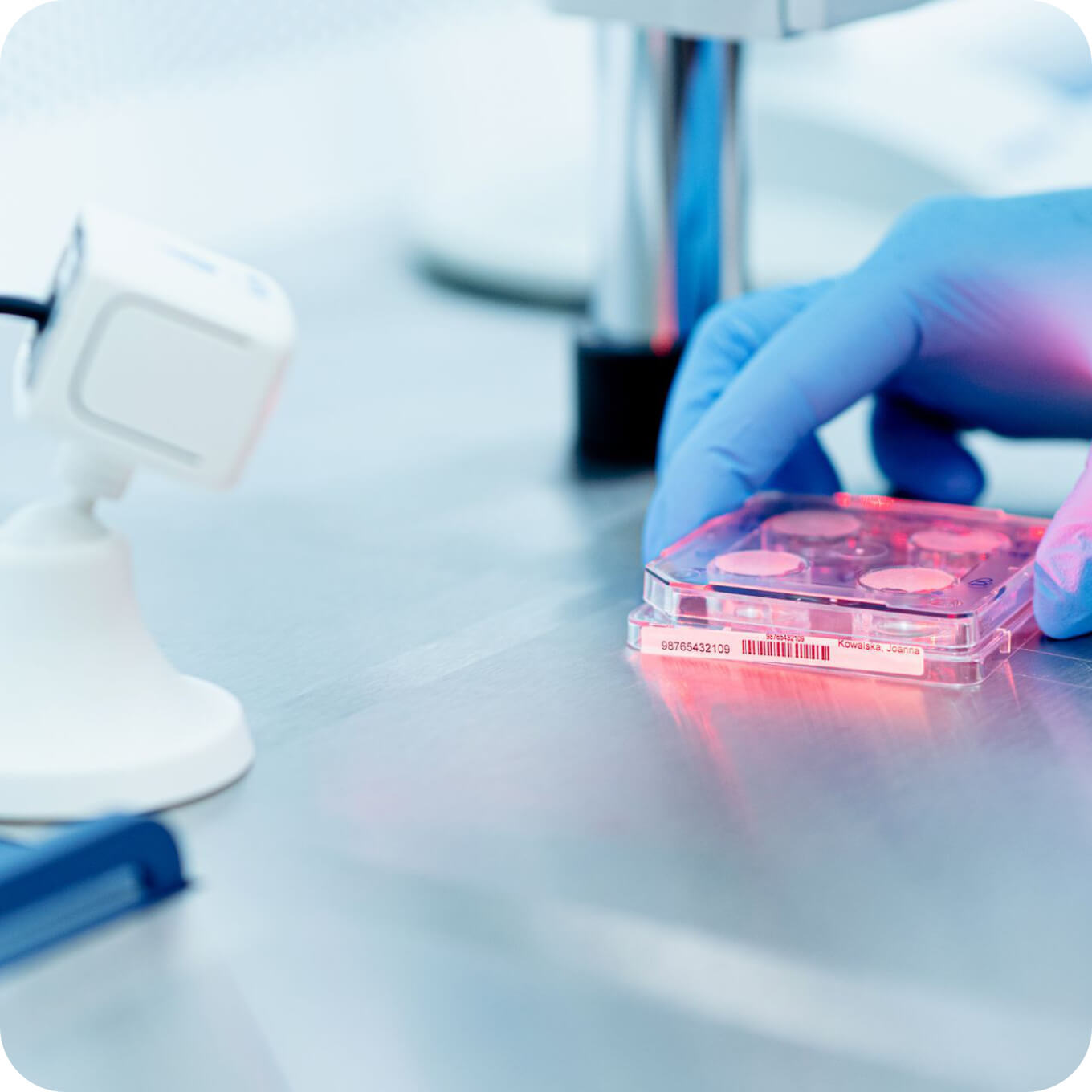
After the patient has been sufficiently prepared for the procedure, reproductive cells or tissues are collected in the selected medical process. The cells and tissues are then delivered to the embryology laboratory.
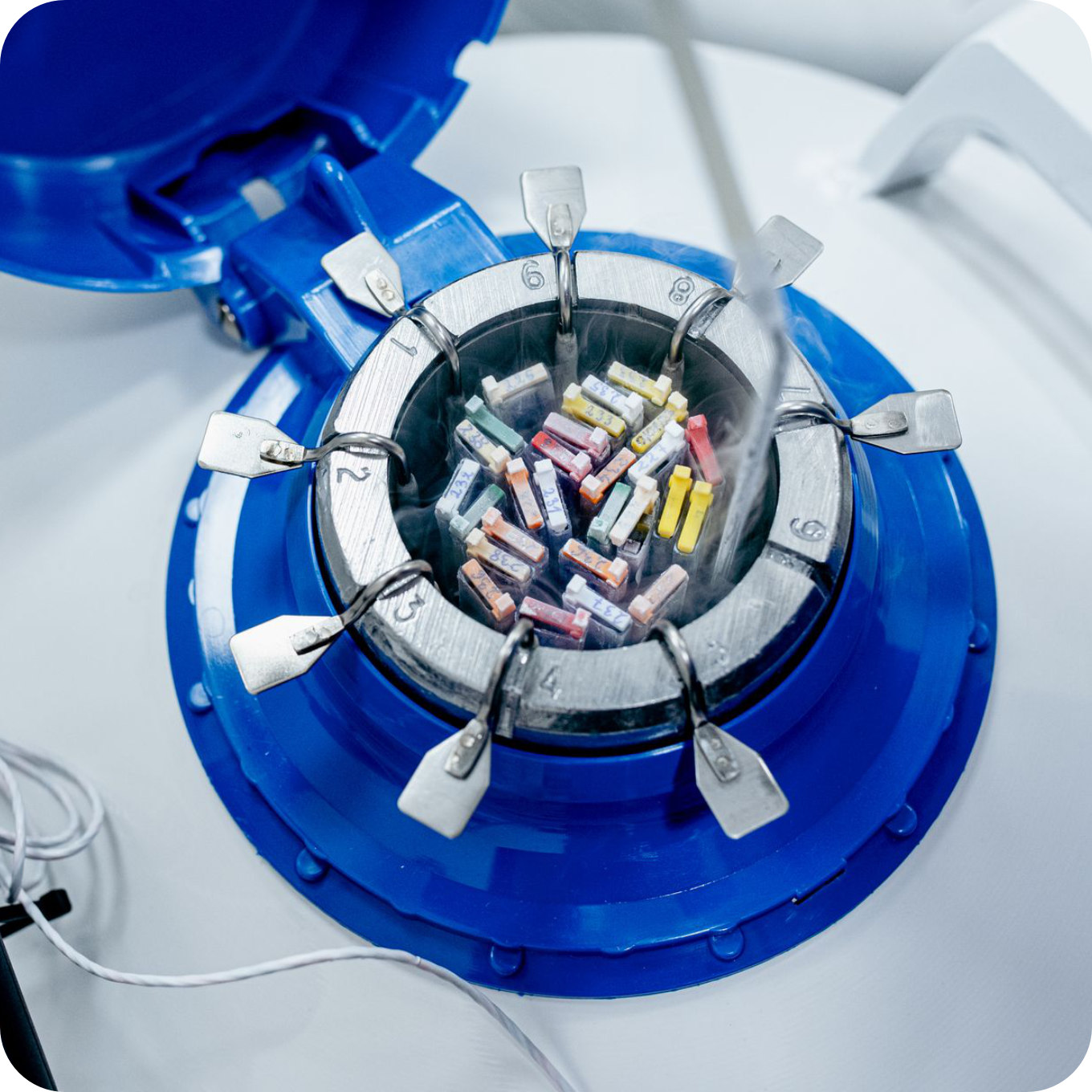
Stage 2
Freezing of cells, tissues and embryos
Oocytes, semen, tissues and embryos are frozen by vitrification. This is the most advanced and safest material freezing technique. Cryoprotectors, or shielding compounds, intended to protect against low temperatures, are in place during vitrification. As a result, we can safely store them at very low temperatures of approx. -196ºC, i.e. in liquid nitrogen, and can do so for many years.
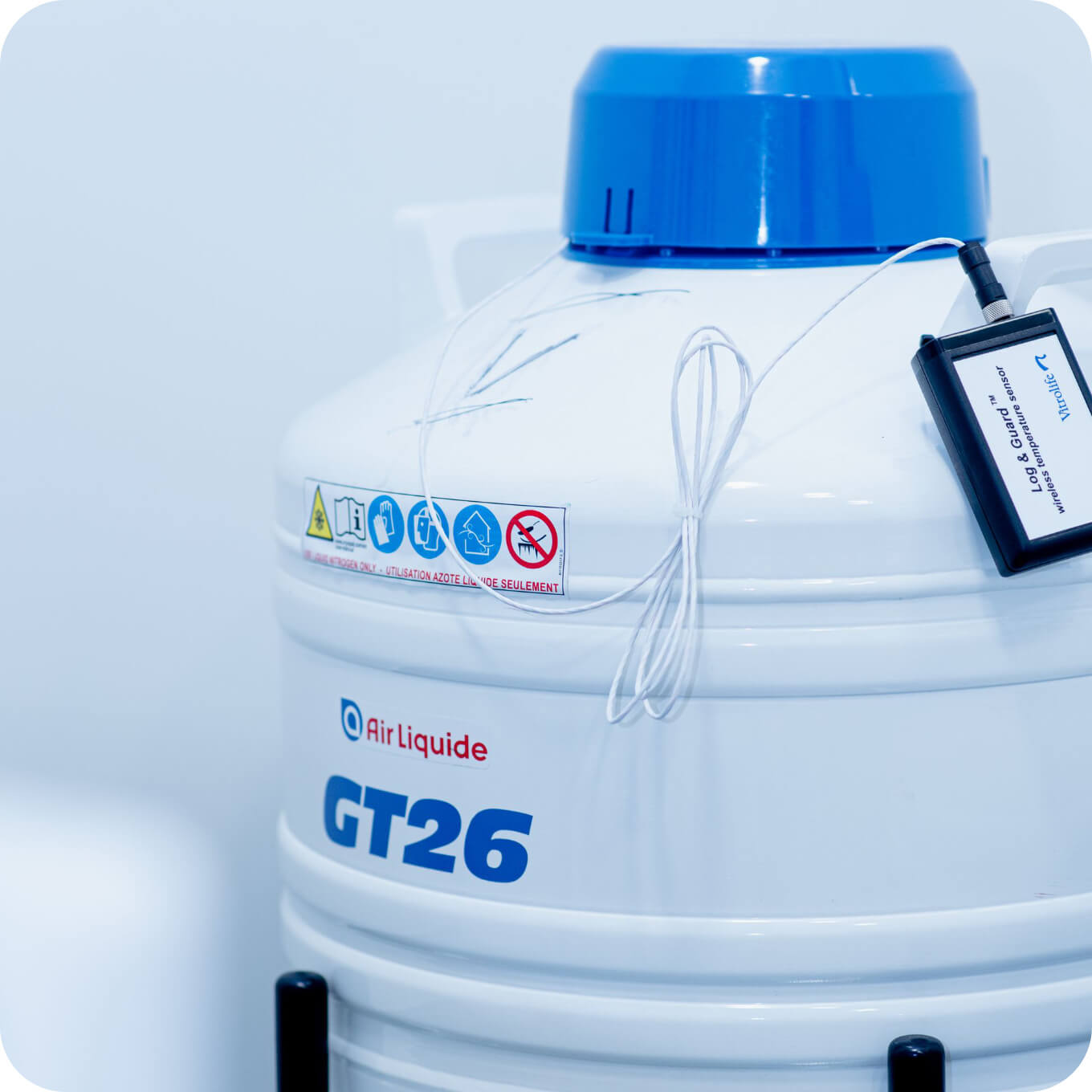
Stage 3
Storage in the Cell and Embryo Bank
Frozen ova, embryos, semen and tissue are transferred to our Cell and Embryo Bank for storage until needed. In our laboratory, all cell, embryo and tissue storage containers are fitted with Octax Log&Guard, a rapid temperature monitoring system that immediately alerts the embryology team in case of any temperature increase. This solution ensures that deposits are kept in optimal conditions.
Good to know
All you should know
about this method
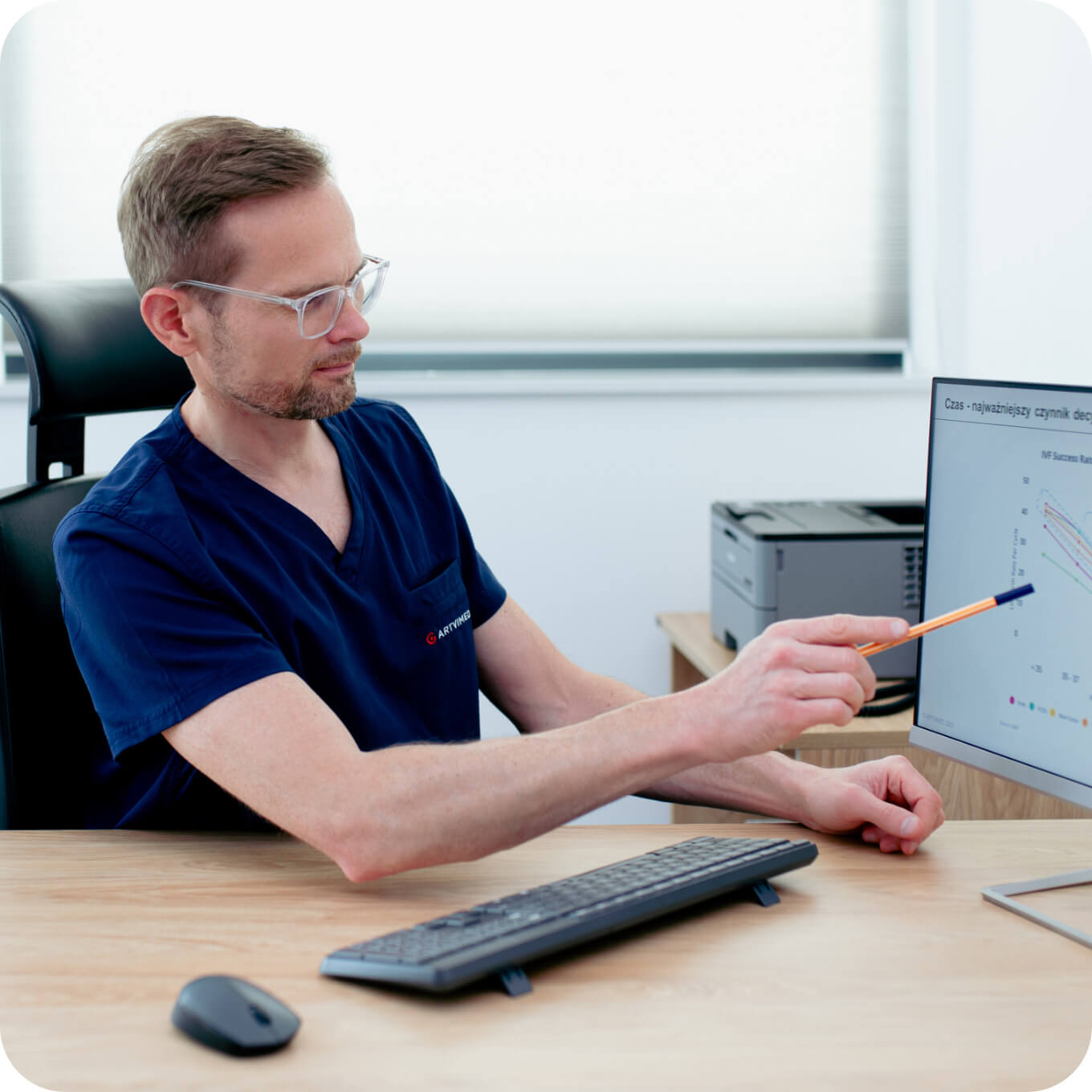
Fertility preservation is recommended for patients prior to cancer therapy (Oncofertility), but also for people undergoing transition, patients with endometriosis, and patients with rheumatological diseases.
Another key benefit of oocyte preservation is that, once frozen, the gametes are no longer subject to aging. In natural circumstances, the quality of the ova deteriorates over time and the ova become more susceptible to damage. Once frozen, time stands still for the oocytes; this allows women to use them for IVF even a decade or so after collection.
We preserve fertility prior to procedures that may permanently or temporarily damage the patient’s fertility. Depending on the patient’s clinical circumstances, it is possible to preserve reproductive cells, testicular or ovarian tissue and embryos.
Preparation depends on the type of material collected for freezing.

More about this procedure
Female fertility preservation methods
Egg cell freezing
During the ovarian puncture procedure, the complexes – the egg cell (oocyte) with its surrounding granulosa cells (so-called cumuli) – are collected. The complexes are incubated and then, once the granulosa cells have been purified, they are subjected to the most effective cryopreservation method, i.e. vitrification.
Ovarian tissue freezing
A fragment of ovarian tissue is collected laparoscopically and frozen. This solution allows for future re-implantation into the patient, providing the woman with the chance to both restore fertility and hormonal function.
Embryo freezing
If a woman is in a stable relationship and plans to have offspring in the future, we also recommend completing part of the IVF programme and freezing the embryos.
Male fertility preservation methods
Semen freezing
Sperm collection and freezing is the easiest way to preserve fertility. This material is available for future use during an insemination procedure or during an in vitro procedure.
Testicular tissue freezing
If azoospermia is present and presence of spermatozoa is confirmed, a testicular biopsy (TESE, TESA or mTESE) and freezing of the collected material are possible.
Embryo freezing
If a man is in a stable relationship and plans to have offspring in the future, we also recommend completing part of the IVF programme and freezing the embryos.
An appropriate method of fertility preservation is recommended after consultation with a specialist and depends on the individual clinical situation of the patients.
Freezing of reproductive cells and embryos
Freezing of reproductive cells and embryos
is an effective
method of preserving fertility for the future.
Test price list
| Semen freezing + 1 year of storage Price per cassette (1 cassette = 3 straws) – each additional cassette: PLN +100 |
PLN 600 |
| Egg cell freezing – outside an IVF programme |
PLN 2 400 |
| Embryo / blastocyst vitrification Price for the first embryo / blastocyst – each additional PLN +350 |
PLN 950 |
| Storage of frozen semen for another year |
PLN 492 (400+VAT) |
| Storage of egg cell for 1 year |
PLN 861 (700+VAT) |
| Storage of embryos / successive years (price per 1 year) |
PLN 861 (700+VAT) |
| Storage of testicular biopsy sample for 1 year |
PLN 861 (700+VAT) |
Opinions
How patients see us
I would like to wholeheartedly thank the ARTVIMED staff for making our dream of becoming parents come true. Our beloved baby son was born on 15 May this year.
Thanks to the physicians at the clinic, the whole IVF procedure was successful on the first try 🙂 We received the best care at each step. I had the opportunity to meet several doctors at the clinic during my appointments, and each one proved to be an outstanding professional.
 |
Opinion (Google) |

I highly recommend this doctor. Competent, committed, empathetic. Specific treatment plan. You know you are in good hands.
 |
Opinion by B. on Dr. Joanna Figuła (Znany Lekarz) |
Thanks to the Doctor, we welcomed our son into the world 2 weeks ago.
We found this doctor after several years of struggling to conceive a child and being treated by specialists who knew nothing about infertility. The doctor immediately outlined a definite plan of action, ordered the right diagnostic tests, and referred us to the hospital for testing. As a result, the treatment progressed in the right direction.[…]
|
Opinion on Dr Ewa Posadzka Agnieszka L. (Znany Lekarz) |

The best doctor we could have come across; she managed our pregnancy with great commitment.
Patient and taking every moment to help or clear up doubts if necessary. Thanks to the Doctor, we are parents of a 5-month-old miracle baby. Highly recommended
|
Opinion on Dr Agnieszka Wolak Anna (Znany Lekarz) |
Dr Baran is by far the gentlest, most thorough gynaecologist interested in the patient’s concerns that I have ever encountered.
Immense knowledge of endometriosis, the skills to provide complete ultrasound testing for it and the know how to guide a patient dealing with this unpleasant disease. […]
|
Opinion on Dr. Rafał Baran (Znany Lekarz) |
I highly recommend pregnancy management. My past experience with other doctors was that there was little to be gained from the appointments, the doctors were reluctant to tell me what they saw, unwilling to answer questions, and Ms Joanna answered every single one, demonstrating an enormous amount of patience. Highly recommended.
|
Opinion on Dr. Joanna Figuła Katarzyna (Znany Lekarz) |
Although our little sunshine is already 6 years old, so far, when I look at her, I still have Dr Chrostowski and the Artvimed clinic in my mind… Dr Chrostowski has got that something about him that, when you are in his office, you know that you couldn’t have found a better place. I will always highly recommend ARTVIMED to everyone.
Ps. I still am in awe of how the embryologists work…how they ‘managed’ to create such a miracle… 😉 Thank you for being there
|
Opinion (Google) |
Very matter-of-fact doctor; she informs you thoroughly about everything and explains everything comprehensively. She informed me of the treatment plan and was very kind, gentle and understanding.
|
Opinion on Dr Katarzyna Doroszewska (Znany Lekarz) |
We would like to thank the entire ARTVIMED Team – our little miracle was born 2 weeks ago. Many thanks are due, in particular, to Dr Posadzka, through whom the right diagnostic work began, and to Dr Chrostowski, who guided further treatment, punctures, and transfer. I also had the pleasure of dealing with most of the doctors during the course of my diagnosis and each one showed a great deal of support and professionalism. We would also like to thank the Embryology Team – without you, our son would not be here. Thank you for the beautiful work of the whole clinic!
|
Opinion (Google) |